Protecting and Caring for Caves
Conservation practices used in protecting and caring for caves and karst must take into account the living ecosystems found within these evolving landscapes. These geo-ecosystems are fragile and once destroyed are gone forever.


Clean up the Dark is international programme aimed at cleaning up our caves and underground streams from pollution caused by humans.
It is part of the Clean up the World International Day which takes place on 20th September each year.
The aquifers found in karst landscapes supply drinking water to nearly 10% of the global population some 800 million people'. (Stevanovic 2018)
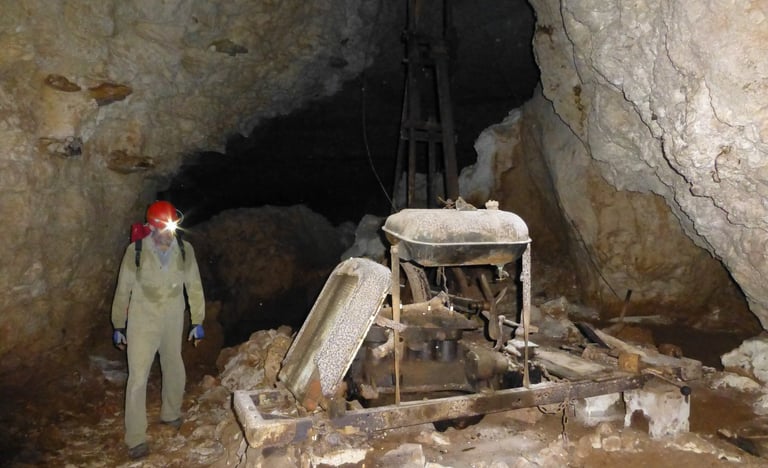
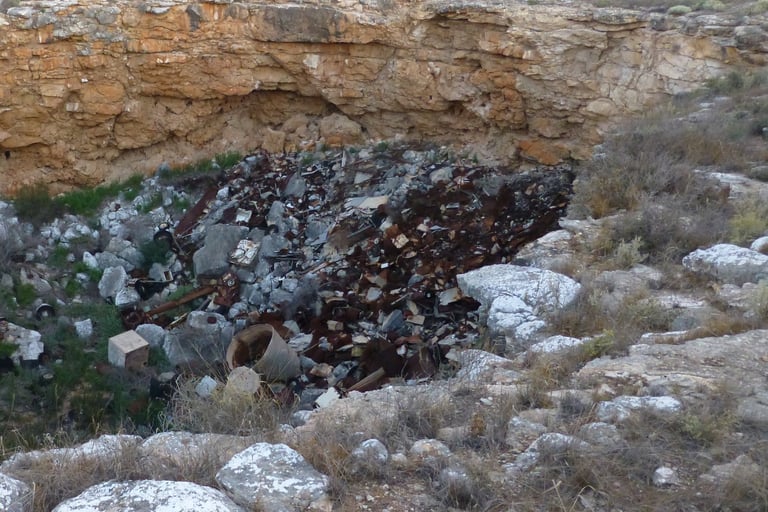
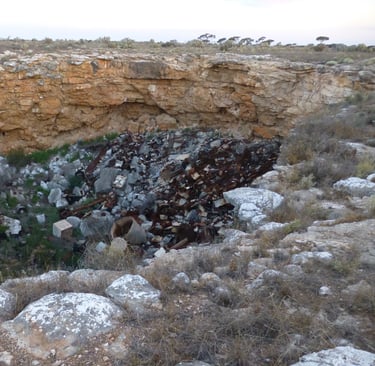
Using cave entrances as rubbish dumps causes:
leaching of pollutants into soils and waterways,
distrupts airflows
restricts and or prevents the movement of cave dwelling animals, such as bats into and out of caves
provides homes to feral species such as cats, rabbits and invasive weeds which further impact karst ecosystems


Photo: © C. Buswell
Photo: © C. Buswell
Clean up the Dark
In Australia, these aquifers include those of the Ottaway basin, Victoria, the Daly Rivers Basin Northern Territory and the Kimberly area of Western Australia.
Our karst aquifers are under a high degree of threat from overuse by mining and agricultural practices.(Harrington & Cook, 2014)
Caves Australia acknowledges Aboriginal and Torres Strait Islander peoples as the traditional owners and custodians of the land, rivers, and sea on which we live, and we pay our respects to their Elders past, present and emerging. We acknowledge and respect the deep spiritual connection that Aboriginal and Torres Strait Islander people have to Country, especially to caves.
This site is sponsored by the Conservation Commission of Caves Australia.